Lacusovagus
Family

Chaoyangopteridae

© 2026 Pteros, All Rights Reserved. All images on this website must be licensed for use.

Family
Chaoyangopteridae
The Crato Formation of Brazil is an incredible place for Early Cretaceous fossils, specifically from time between the Aptian and Albian Stages, a little more than 112 million years ago. The rocks here preserve an ancient lagoon environment bordered by coastal forests.
At the time, the Atlantic was an inland sea that covered large parts of northern South America, including the Crato area. Both this and the later Santana Formation are part of the Araripe Basin, a network of coastal ecosystems that preserve an abundance of large Early Cretaceous pterosaurs.
Other remains at Crato include the tiny early crocodilian Susisuchus anatoceps and a number of fish and invertebrates like insects, spiders and whip scorpions.
The Crato was once thought to be part of Santana, but it was recently realized that the two are distinct formations, not just the same. Currently the latter is dated at a few million years earlier.
The two formations do not share any tetrapod fauna. The largest pterosaur in the formation is Lacusovagus.
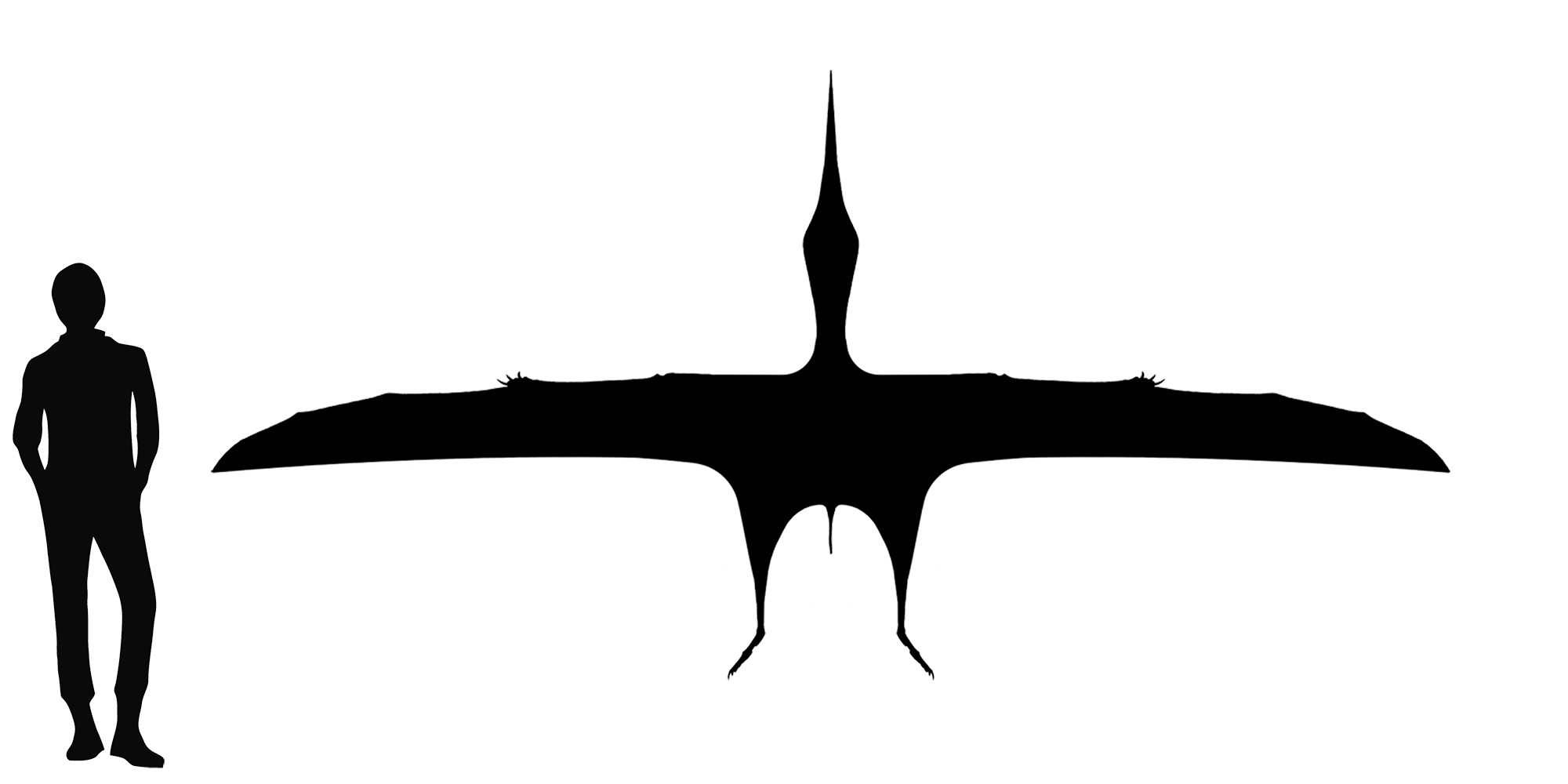
The only species, L. magnificens was named and described by Mark Witton in 2008. It was a chaoyangopterid, and a terrestrial predator with a longish neck and large head. The animal was roughly the size of a man in life, while its wingspan was around 4 meters across.
4.1 m (13.5 ft)