Cearadactylus
Family

Ornithocheiridae
© 2026 Pteros, All Rights Reserved. All images on this website must be licensed for use.

Family
Ornithocheiridae
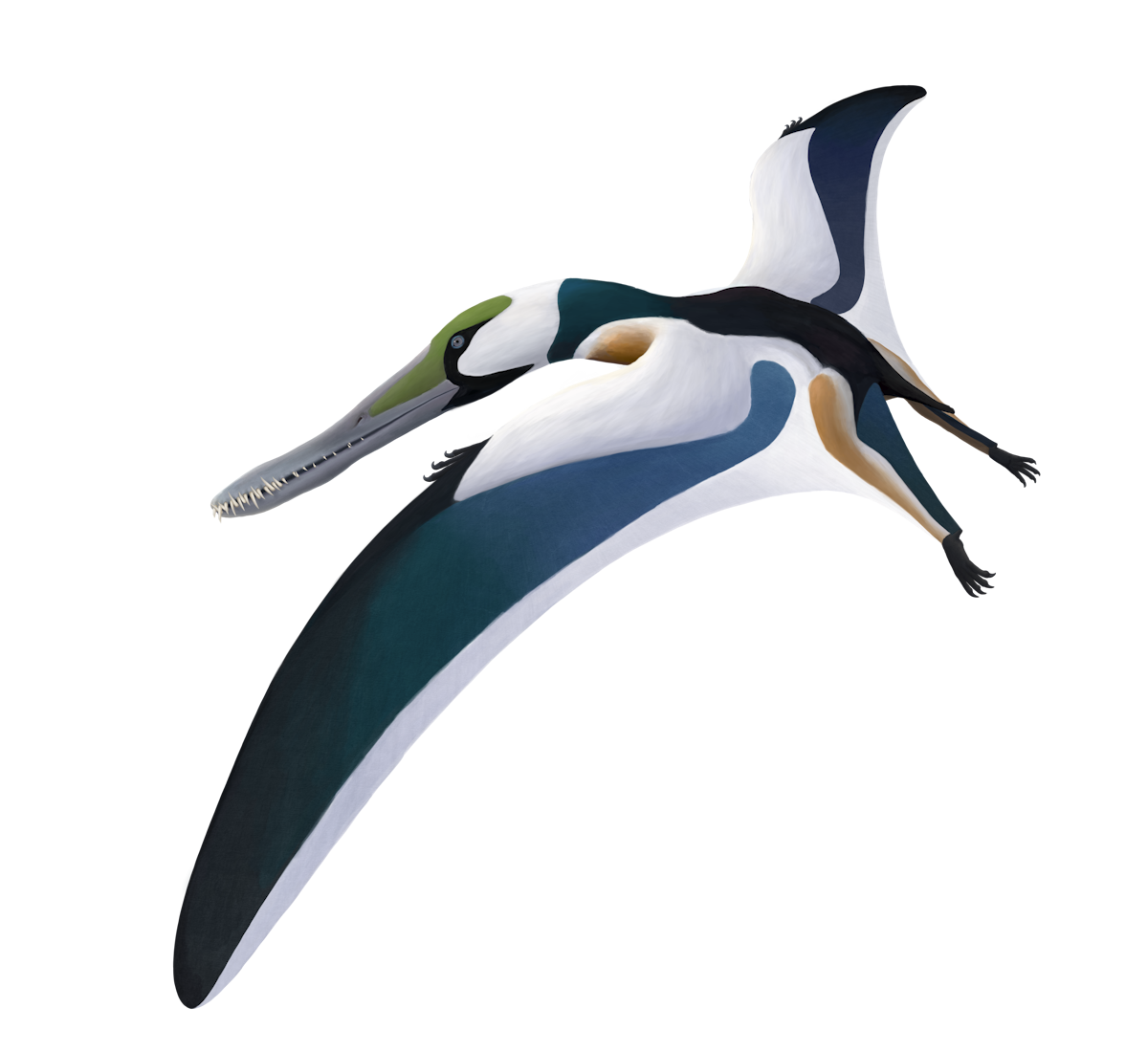
Fossils of the imposing Cearadactylus were first described in 1985 by a duo of Italian fossil hunters Giuseppe Leonardi and Guido Borgomanero. It is known from a single long skull lined with teeth. The animal's narrow skull was 57 centimeters long and there was a low crest down the end of the snout. Despite its size and a fierce set of teeth, Cearadactylus atrox was far from being a predator of large land animals. Instead it was a fish hunter, somewhat similar to a huge albatross.
Cearadactylus may have hunted just like other big ornithocheirid pterosaurs, by flying low over the waves and spearing its prey on its teeth. These thin, needle-like teeth interlocked to create a perfect trap for slippery marine creatures.
Cearadactylus was one of the many big pterodactyloid pterosaurs from the Early Cretaceous Santana Formation. It was able to coexist with the other pterosaurs by way of diet.
Some of the Santana flying reptiles like Tapejara were equipped with the short beaks of generalist feeders while Thalassodromeus was an active, fast predator of small prey on land. By feeding on fish, Cearadactylus was able to avoid competition with a number of other similarly sized animals.
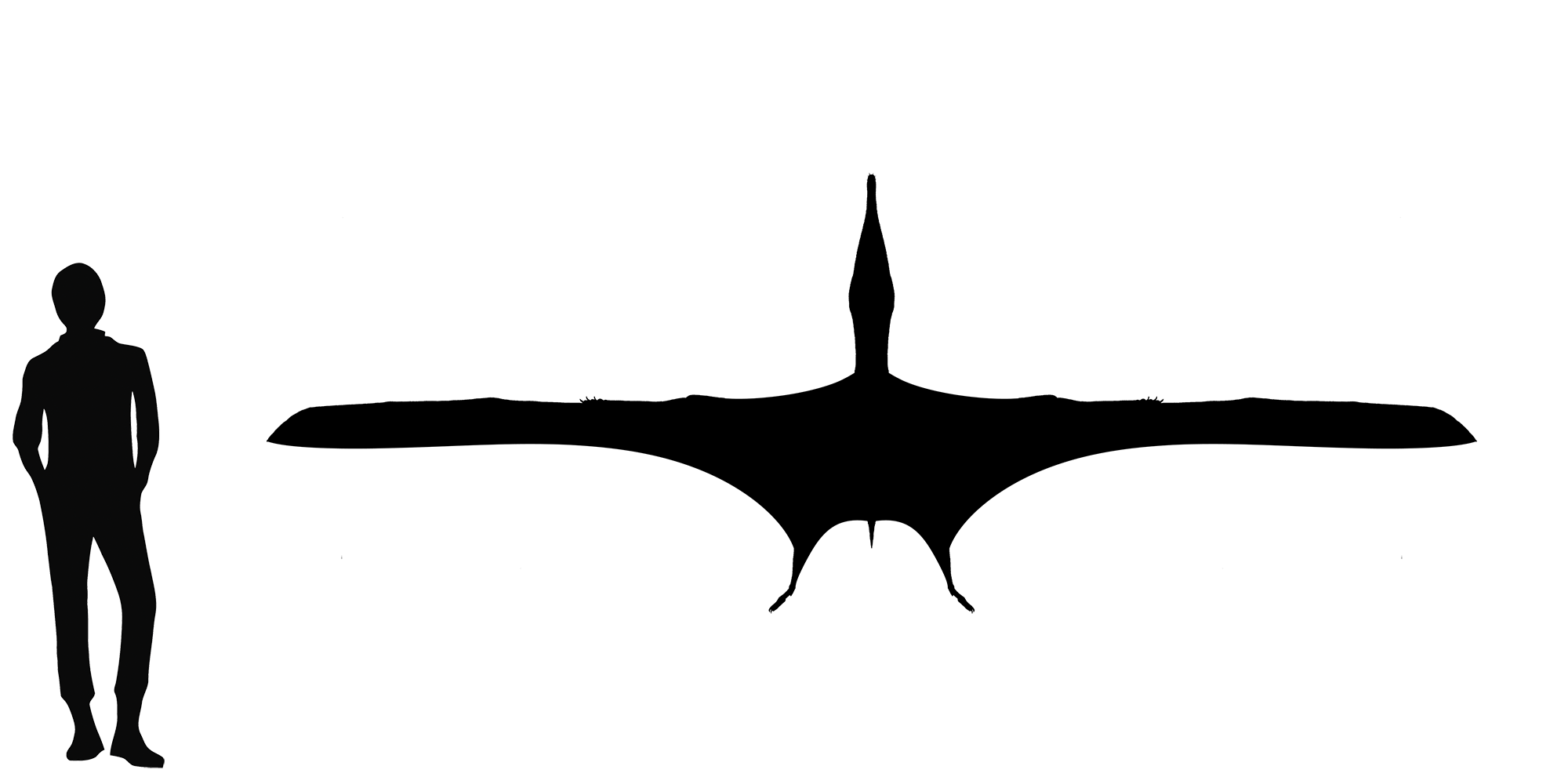
The pterosaur gets its name from the Brazilian state of Ceará,and taken as a whole, translates as "atrocious finger from Ceara". The wingspan of Cearadactylus has been estimated as 5.5 meters across, as per Peter Wellnhofer in 1991.
5.5 m (18 ft)