Cascocauda
Family

Anurognathidae

© 2026 Pteros, All Rights Reserved. All images on this website must be licensed for use.

Family
Anurognathidae
In 2022, Yang Zixiao and colleagues described a new juvenile pterosaur specimen as a new genus and species of anurognathid, Cascocauda rong. The only specimen of Cascocauda is a more-or-less complete skeleton with extensive soft tissues preserved on two slabs of fine-grained mudstone found in the Middle Jurassic Tiaojishan Formation of Hebei Province, China. The name Cascocauda is derived from Latin words meaning ancient or primitive tail. The species name, rong, is Mandarin for velvet; with the intended meaning of fluffy from the phrase “máo róng róng,” meaning “a fluffy appearance.”
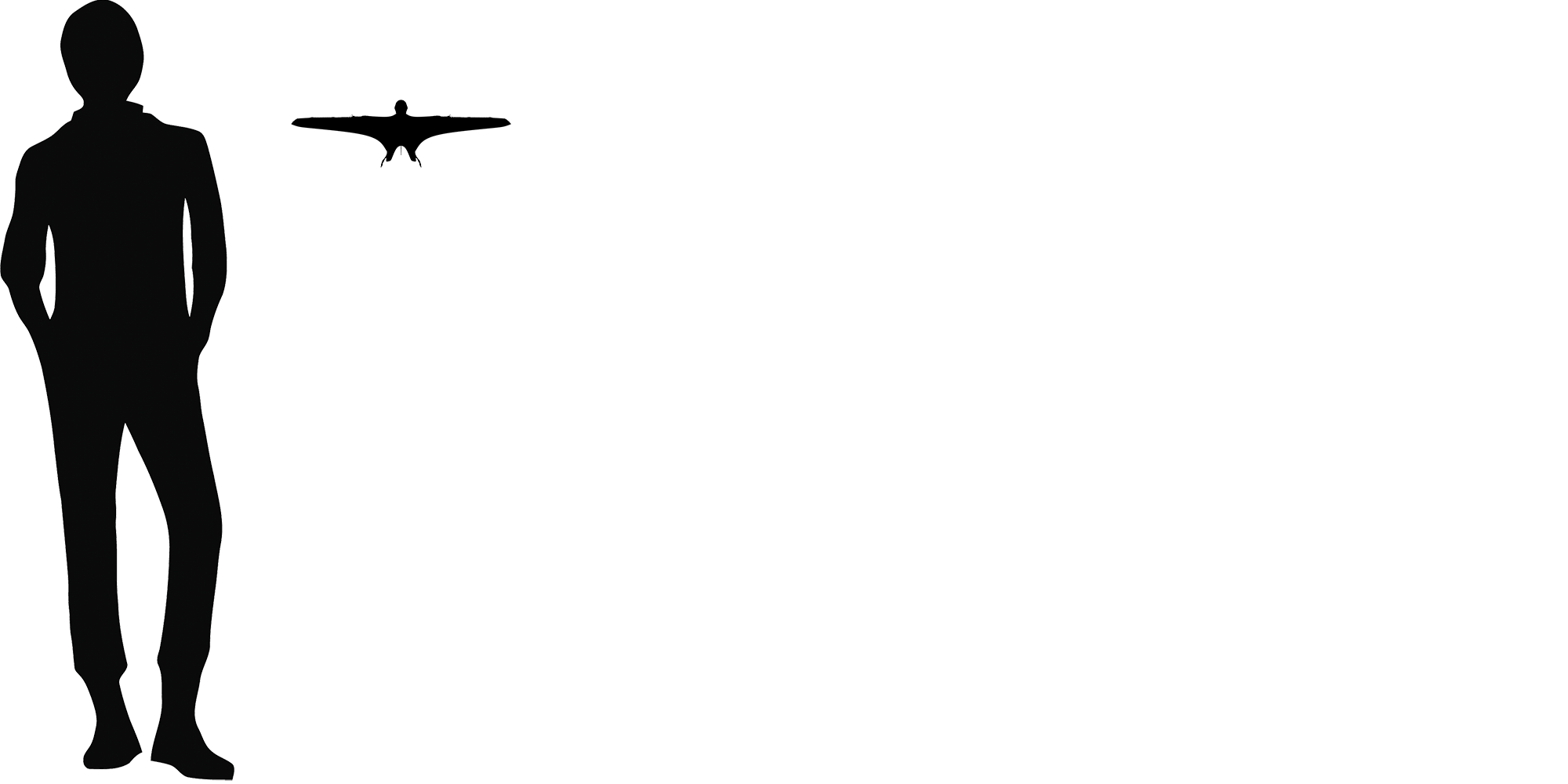
Cascocauda was a small pterosaur, with a wingspan of only 43 cm (17 inches), although the only known specimen was not fully grown when it died. Like all anurognathids, Cascocauda had a short skull, with a rounded face. It differs from other anurognathids because its skull is wider than it is long. It had long and very thin teeth which were slightly curved at their tips, another distinctive feature of this species. Cascocauda had a relatively long tail for an anurognathid, although it was still short for Jurassic pterosaurs.
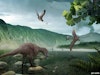
Like all anurognathids, Cascocauda rong hunted insects in flight, piercing their prey with their needle-like teeth. Well-preserved specimens of anurognathids, including that of Cascocauda, show that they were covered in soft, hair-like pycnofibers, making them look fluffy. When Cascocauda was alive, some 164 million years ago, this part of China was a lush, temperate forest with plentiful lakes and rivers.
Yang and colleagues found Cascocauda to be a batrachognathine anurognathid, closely related to both Batrachognathus and Sinomacrops. Batrachognthines are known from Middle to Upper Jurassic rocks in Asia, and are the sister lineage to the anurognathines, which comprise all the remaining anurognathid species and survived into the Early Cretaceous. The anurognathids have a contentious position within the pterosaurs, with Yang and colleagues finding them to be among the early, long-tailed pterosaurs, just outside of the lineage Breviquortossa, which includes the rhamphorhynchids and the short-tailed pterodactyloids, among others.
0.43m (17 inches)